Showing posts with label deciduous tree. Show all posts

11/03/2016

Zelkova (Keyaki)

Zelkova is a deciduous large tree found in East Asia. The fresh green and autumn leaves are beautiful, have many planted along the streets and in the parks in Japan.


Trees in Japan
Center of Tokyo city


Zelkova has a long life, the stem will be thick. So it is excellent as well as timber. The timber has a water-resistant, used as building materials, desks, and bowls. Once upon a time farmers had planted zelkova for descendants. So you can see a big zelkova in the outskirts of the rural.

Japanese garden trees
Shining stem of zelkova


In Tokyo, you can see the large zelkova in Omotesando and the famous shrine, they are beautiful. However, unfortunately many places, zelkova is cruelly cut branches. Because Japan is too narrow for zelkova.

trees of Japan
Leaf of zelkova

10/31/2016

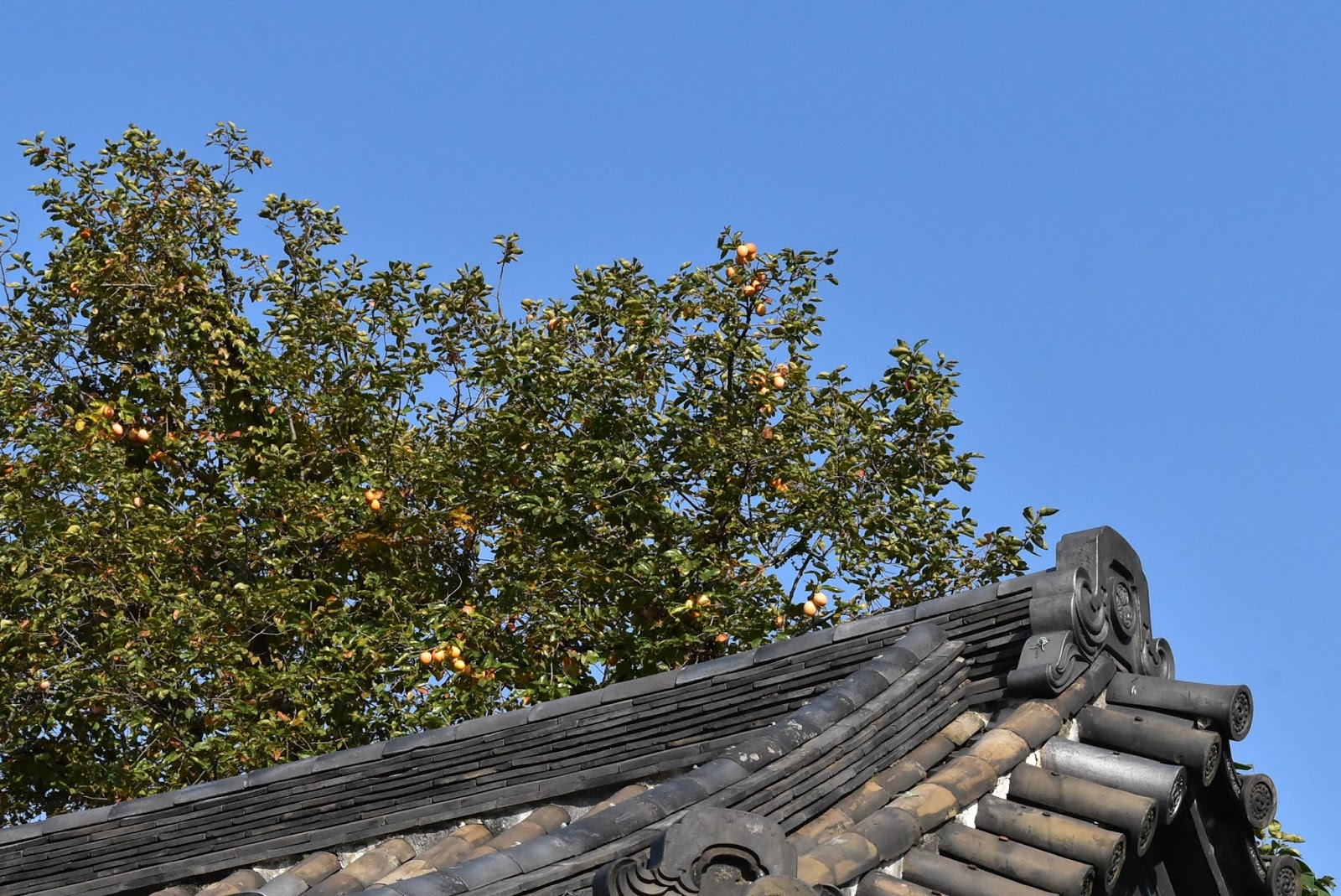
Persimmon tree (Kaki)

Although the persimmon is native to China, it has been planted from the old era in Japan. Sometimes, the species is carried by wild animals, the tree has grown up in the mountains.

Trees of Japan
Fruits of persimmon


There are many cultivars, shape and taste is different, respectively. Roughly, it is classified as sweet persimmon and bitter persimmon. Naturally sweet persimmon is preferred, however, to grow sweet persimmon is limited to West Japan. Only bitter persimmon  will grow in a cold region, but it will also be an excellent food by hanging out in the sun.

Persimmon tree has beautiful shinny leaves


Persimmon leaves are used in tea of raw materials and sushi. In addition, the juice of bitter persimmon is used to paint for preservatives. And stem of persimmon is used in furniture. Since the application is many, we planted this tree even those who are not interested in the yard, but the fruit of the orange shine in the sky of autumn, is indispensable to the Japanese landscape.

Trees in Japan
Old house with large persimmon tree

10/27/2016

Japanese beech (Buna)

Beech is one of the yellow leaves are beautiful trees. By now, you can see the leaves golden.
The nature of Japanese beech is the same as the European beech, prefer the cold place.
Place where you can see the most beautiful beech in Japan is "Shirakami-sanchi  (Aomori Prefecture and Akita Prefecture)". There is known as the World Heritage Site.

Trees in Japan
Yellow leaves of Japanese beech


In the vicinity of Tokyo, the natural beech has decreased due to the influence of global warming and air pollution. But you can see the tree if you go to Nikko and Nagano,and in botanical garden near Tokyo.

Trees in Japan
White stem and fresh green


Beech is not only yellow leaves, fresh green and white stem is also beautiful. Walking through the forest of beech, made to feel like you are in the plateau.
However, since the seed is a favorite food of the ferocious bear, have to be careful.

Trees in Japan
Seeds of Japanese beech

10/12/2016

Weeping willow (Shidare-yanagi)

Weeping willow is native to China, but it is a tree that can help to make the Japanese landscape. It can be seen in such Eateries as called "Ryoutei", old moat around the castle , along Kyoto river and more.

In front of imperial palace


In Japan, you can see more than 30 kinds of willow tree, but the majority of the Japanese are thinking, weeping willow is that it is representative of the Japanese willow.

Leaves of weeping willow


There are a few of the superstition about the weeping willow. One of them, is that planting a weeping willow, there people gather. That is why to plant it in front of the restaurant.

Another is that , a ghost (woman wearing a white kimono) is to come out under the trees of the weeping willow. For this reason, many Japanese have a scary image to the weeping willow.Japanese ghost are fluffy, it will match the movement of the leaves of the weeping willow.

Is anyone under the tree?


Looking at the weeping willow, it will be refreshing feeling. In particular it is exceptional Looking at the riverside in the summer. Not only the coolness of the leaves fluttering in the wind, seems to become extra cool because there is the image of a female ghost.

However, beautiful flowers bloom in spring

10/09/2016

Katsura tree

Walking through the forest at this time, occasionally, I feel the drifting sweet smell. It is a scent that Katsura tree is deciduous. It is a smell like caramel, but not everyone is aware of.

yellow leaves in autumn


Katsura tree is a unique to East Asia. In Japan,normally seen in humid mountains, if the condition is good, It will be a big tree of height of 30 meters.For very long pole can be taken, was a material, such as a dugout canoe.

For reference, Katsura tree in the United States of the Hudson River, was across from Japan at the end of the 19th century.

Leaves of Katsura tree is heart-shaped


Katsura tree has beautiful yellow leaves in autumn. Then, similar to the Cercis chinensis, Linden and Marubanoki, its leaves are cute heart-shaped. Its appeal is reviewed, it is growing in popularity. Especially recently,  we have an increasing number of cases to plant as a symbol tree,in the private garden and along the urban dry road.

Katsura trees at the center of dried-up Tokyo


Actually, Katsura tree is not suitable for the small garden and dry area, I am worried about their future.

Katsura that behaved well withstand

Mantenboshi (Doudan tsutsuji)

There is a lot of beautiful trees of autumn leaves in Japan. Mantenboshi is one of the trees that are seen easily among them. Natural distribution area's mountains of rocks, however, are planted many in the city of the road along and parks.

Autumn leaves of Mantenboshi


Regularly split the branches, the leaves of the diamond is, it is a feature of Mantenboshi. Light green of the fresh green and flowers such as bloom blueberries in the spring is also beautiful.

Flowers of Mantenboshi


Growth enough to be used in the bonsai is slow, strong to pruning, it is why this tree is planted a lot. Form of a branch is similar to the basic part of the old lighthouse. So, the Japanese call this tree, refers to the lighthouse as "doudann-tsutsuji".

lighthouse upsidedown