Showing posts with label evergreen. Show all posts

10/21/2016

Shira-kashi (Evergreen oak)

9 types of oak trees can be seen in the Japanese archipelago.
Among them, "Shirakasi" (Evergreen oak) is the tree that seen many in the east Japan.

Shira-kashi around classical house


Shira-kashi does not have an attractive flower. It does not have so much of features. However, it is durable and easily available, cheap, trees grow well branches and leaves, become blindfold and windbreak . So, it has been planted a lot along the streets, parks, around the house.

Pruned in Japanese style


Its leaves has an elongate shape similar to bamboo. And, the back side is a little white.
In early summer, bloom similar to the chestnut, in the fall can be a small acorn.

Leaves of Shira-kashi

Its wood is hard, so it is used such as the handle of farming tools, wooden sword and more.

If we write Shira-kashi in Chinese characters, use the Chinese character that means "white hard wood".

Acorn of Shira-kashi

10/16/2016

Japanese tea tree (Chanoki)

Japanese tea flowers are blooming. Because it is head down, it is difficult to see. However, if you observe carefully, you can find it pretty. The flowers blooms at a time when other flowers are not so much bloom, so it has been loved from the old days.

garden trees in Japan
flower of tea tree


In general, tea tree is not for appreciation, is practical. As you know, the Japanese pick this leaves for drinking. Old farmer had planted the tea tree on the edge of the field in order to use it.

garden trees in Japan
Terraced fields of tea is a traditional landscape of Japan


And, tea tree has played an important role in the history of the Japanese garden. Narrow dark garden of Wabisabi ,that was created in order to drink the tea, is the origin of the classical Japanese garden, attract a lot of foreign tourists nowadays.

garden trees in Japan
leaves of tea tree

Although Japanese is no longer drink Japanese tea at home than the old days, tea entered the PET bottle is popular, are sold at about the installed vending machine fill the town.

The classic method of steaming tea

10/15/2016

Podocarpus (Inu-maki)

Podocarpus is a tree that grows in the seaside of the forest. Has a similar atmosphere to the pine, are pruned in the same way as pine, it may become the leading role of the garden.

Trim as a plurality of balls are arranged at random


The leaves are wider than the pine, since the density of the leaves is high, are pruned in a square, it is also often used as a hedge. For strong sea breeze, the seaside town, is also effective as a windbreak.

If the old fence, It's very solid, people can be on it


In the same way as Japanese umbrella pine , it has been named "Maki"in Japanese, but it is totally different. In Japan, in order to indicate that the quality is inferior, we use the word "dog (Inu)" as a prefix. Podocarpus are considered inferior in appearance than Japanese umbrella pine , it has been referred to as the "Inu-maki".

Fruits of Podocarpus


However, fruits of Japanese umbrella pine is pine cones. It is hard to eat them, but the fruits of Podocarpus are edible. Two-color fruit of that ripen in autumn, is a strange shape, but the red part is sweet and delicious.

Unfortunately, in the case of the fence, too pruned, you can not find this treat, to look for abandoned Podocarpus, you'll be able to eat it.

Podocarpus in wild style

10/10/2016

Japanese cypress (Hinoki)

Many Japanese cypress has been planted in Japanese mountain. The number is second to Japanese cedar. Because It is excellent as timber.

Japanese  cypress is in a conical shape, if there is no hindrance,


Japanese cypress wood is white to the core, is good-looking, with a refreshing scent, is strong in the water. You'll see if you come to the hot springs in Japan, why wooden bath tub is made of this wood.

Bark is peeled off easily, become the material of the roof


In addition, there is a bactericidal action on the leaves of Japanese cypress. For this reason, in the hope that effect, in a dish of Sashimi, We serve the leaves of Japanese cypress along with the fish.(Note, leaves can not eat !)

A lot of leaves of similar shape, not a characteristic


Japan's people of old age, made a fire with the leaves and branches. This tree is easy to burn, Japanese name "Hinoki" means "fire tree".

It is a familiar tree in Japanese, but it is a practical tree, rarely able to use in the garden in appreciation purpose. On behalf of it, we plant the varieties of horticultural.

One of the cultivars "Ito-hiba"

10/08/2016

Japanese Holly (Inu tsuge)

Japanese holly (Inutsuge) is a shrub that does not have any features. The leaves are small and dark green throughout the year. Flowers in summer does not stand out. Fruits that can be in the winter in the black, not noticeable from a distance.

Hedge of Japanese holly


However, it is essential as a shrub to create a "frame" of the Japanese garden. Sometimes it is as a hedge, sometimes it is pruned in geometric pattern.

At the Imperial Palace / Tokyo


In the Japanese garden, similar to the same kind of role Macranthum azalea (Satsuki).
However, the leaves of Japanese holly is more green and harder.

Leaves and flowers of Japanese Holly


The reason for Japanese holly is often used in Japanese garden, it growth is slow, the form is difficult to change, flowers and fruit is not conspicuous, is that it does not interfere with the main character (such as pine and plum)

Rarely take center stage

Japanese aucuba (Aoki)

Japanese aucuba (Aoki) is a tree that has spread to Europe in the garden.
However, originally a Japanese tree. It was over the sea at the end of the 18th century.
Strong in the shade, easy to grow, the leaves all year round shiny clean, These are the charm of Japanese aucuba.

Japanese aucuba near by Japanese lanterns

The common people of the Edo era in Japan,were crazy to this tree, they were breeding various aucuba, enjoyed the pattern of various leaf. And, trees red fruit is regarded as good luck, they were glad to see the red fruit of aucuba.

Fruits of aucuba

Japanese few planting aucuba in the garden nowadays. Rather than the garden to see aucuba, often in the dim forest. Because birds are scattered sowing the seeds of this trees.
Garden there is a aucuba, just garden of the house there are the elderly. What about in Europe.

Aucuba with classical private house

10/06/2016

Japanese Cedar (Sugi)

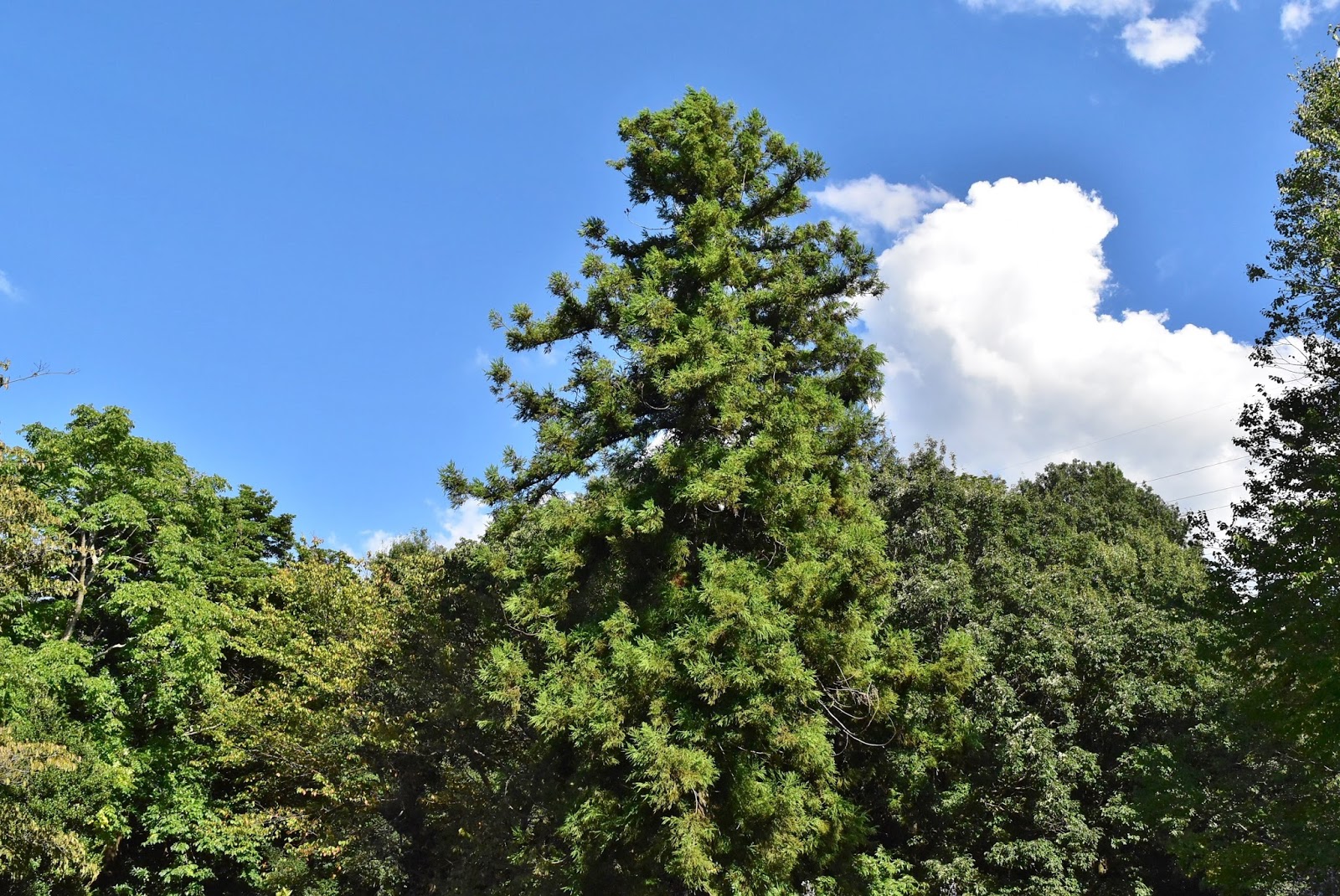
Cedar of Japan is a Japanese endemic species, is planted all over Japan as if it cover the national land of Japan.
Because of its fast growth, moreover, extending straight, it used to be evaluated utility value as a useful timber.
cedar of Japan in natural style

Ironically,over-planted and the labor costs of Japanese has been soaring, Japanese cedar is no more promising timber. Abandoned cedar is now make not only  the dim forest, but also many hay fever patients, so it have been demonized.


Flower of Japanese cedar

On the other hand, in the famous tourist destination of Japan such as old temples and shrines, there is always a big cedar tree. It also has become an important tourism resources such as the cedar tree of longevity in Yakushima. Cedar is indispensable in order to create a solemn and sacred atmosphere. And  we make a Japanese-style scenery,using wisely the pruned cedar even in the Japanese garden.

Japanese cedar in pruned style


Modern Japanese tend to demonize the cedar tree, but a long time ago even now cedar tree has supported our lives. Fortunately, no pollen cedar and low lumber way are being developed,innovation for co-exist will be achieved.

leves and cones

10/04/2016

Japanese Umbrella Pine (Kouya-maki)

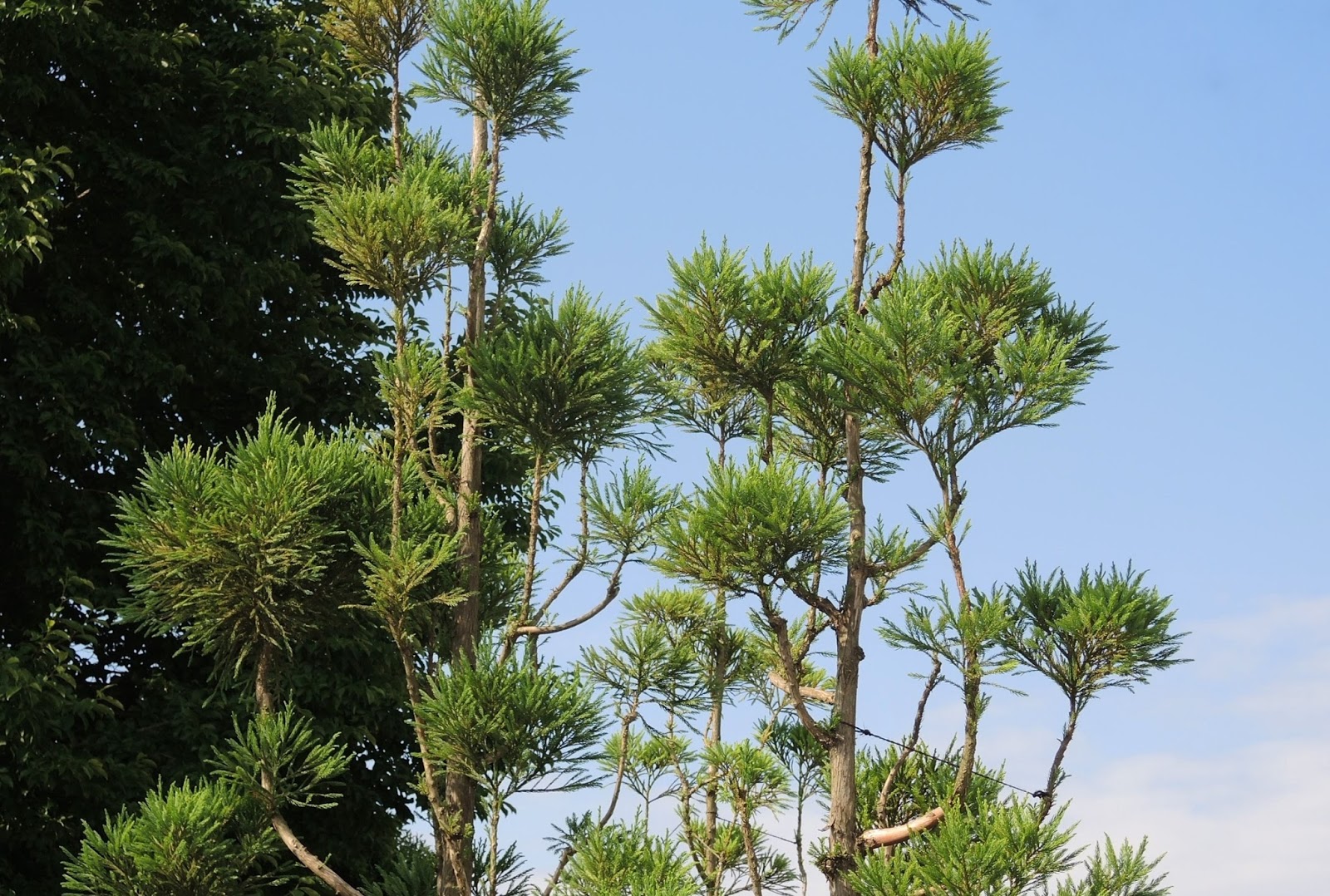
Japanese Umbrella Pine(Sciadopitys verticillata) is known as the Japan-specific tree.
And in Japan, this tree is listed up as the world's three major garden tree, along with the Himalayan cedar and Brazilian pine.

It's slow growth, even if the big that it does not disturbed tree form, it has been used as a garden of the temple from the old days.

leaves of Japanese umbrella PIne

Its leaves are similar to the pine, not scratchy. Since softwood, flowers are inconspicuous, the species that can be in the fall is a characteristic.

leaf from pine cones

Surprisingly, it leaves are growing from the pine cones. However, in a sober phenomenon, not that Japanese people are talking about.

What is more important than it is,this timber is one of the best five of excellent timber in Japan, resistant to moisture. So people used it for bath tub and the coffin for the greats long time ago.

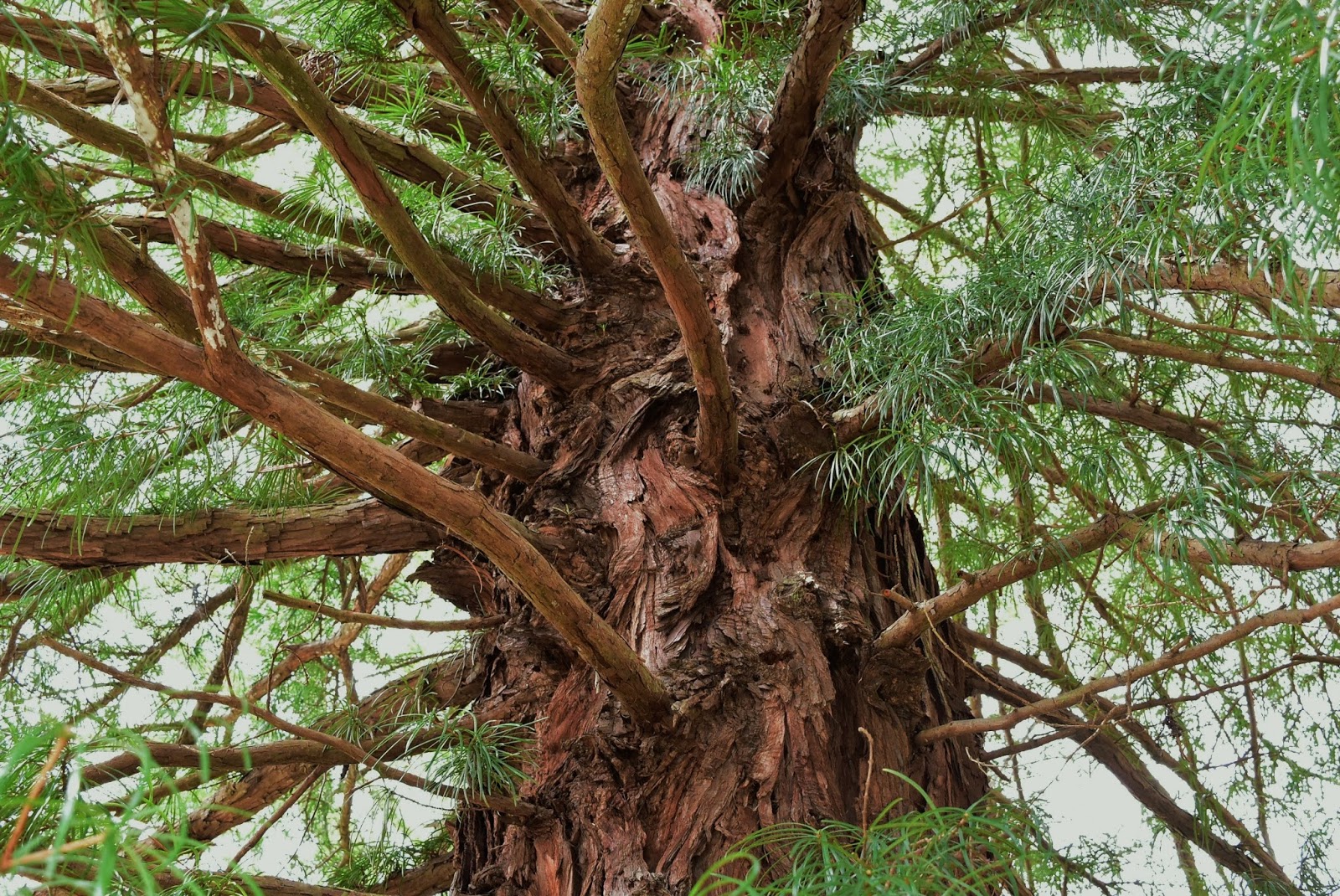
aged big tree

Today, it is hardly to make a coffin with this tree, not even to plant this tree in the garden in the younger generation. However, the beauty of the tree form of this tree is reviewed, Tokyo Sky Tree is said to mimic the shape of the tree.

looks like Tokyo sky tree???


10/03/2016

Mokkoku (fellow of the camellia)

Once,Mokkoku has been referred to as the king of Japanese garden tree.
As a proof, you can see this tree almost always in classic Japanese gardens. 
However, Mokkoku has no major feature,is the hard-to-remember tree.


In why,is this tree is common in Japanese gardens.
It is related to the national character of Japanese.
Mokkou grows slowly.The shape does not change too much.
This "does not change" is consistent with the nature of Japanese people,
does not like to stand out.
This is the main reason that this tree has become widespread in Japan.


Mokkoku blooms small white flowers in summer, also makes red fruits in the fall.


However these do not have much appreciation value.
Charm of this tree is essentially, Its leaves such as a shoehorn.

Leaves of Mokkoku is thick and shiny.
The era when there was no street lighting,the leaves is reflected in the moonlight.
It would have made a beautiful sight.  

Camphor tree (Kusunoki)

In Japan there is a tendency to sacred a large tree,
a lot of giant trees are left in the country.
One of the most large number tree in which is the camphor tree.

Referred to as the camphor tree in the Japanese the Kusunoki.


Camphor to be purified from the camphor will be celluloid of raw materials.
For this reason once they were brought up as a national policy.
Now they have been active in making the shade of a tree in streets and parks.


Leaves of a camphor tree has short live, 
they all will be replaced in about a year.
For this reason, the color of the leaves are bright.


Also favored as a symbol tree in a contemporary cityscape.

9/28/2016

Black pine (Kuro-matsu)

Including the Imperial Palace and Kyoto temples,
indispensable to the Japanese garden,it is the main tree.
It is called Kuro-matsu in Japanese.
Black pine is a hardy tree that grows along the coast of Japan,
it is referred to as a man pine from its majestic appearance. 
But usually they are trimmed in round shape such as the picture above.


Ancient feudal lords(Daimyo) often used black pine in their gardens.
Because of its dark green leaves even in winter, is considered a strong vitality tree,
or become a symbol of longevity.
Black pine is often used also in the home garden,
around the old house, sometimes to crawls the branches above the entrance.
It's called mon-kaburi  in Japanese.

Red pine (Aka-matsu)

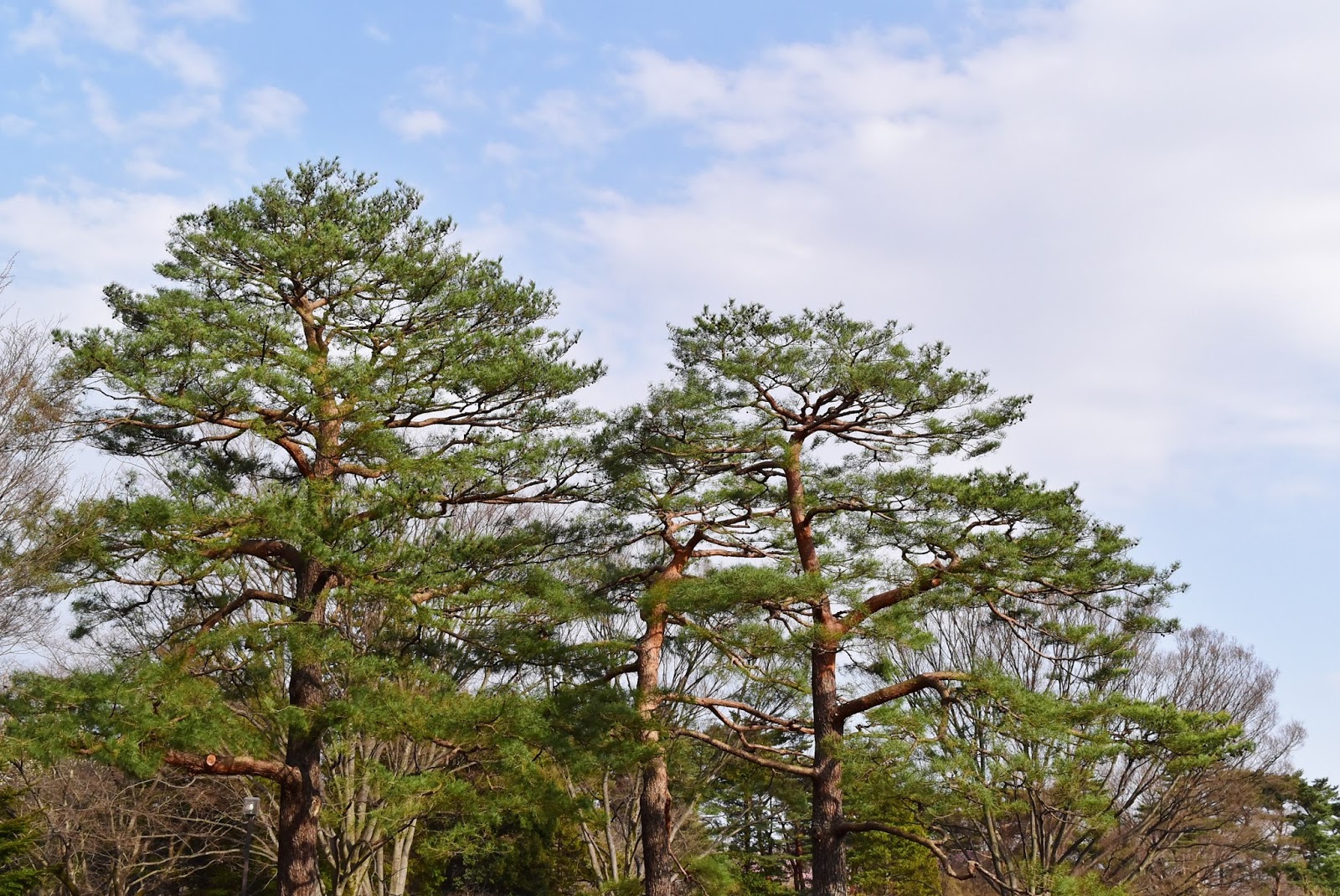
Red pine (Aka-matsu) is another pine trees can be seen in the same way as Black pine (Kuro-matsu) in the Japanese garden.
It is native to mountains of Japan, referred to as a woman pine (Onna matsu),
because of its soft appearance compared to the Japanese black pine.
It is called Akamatsu which means red pine in the Japanese from the fact that in comparison with the Japanese black pine with a stem of  red brown.

Sprouts of Akamatsu are in red brown, a leaf is soft compared to the Japanese black pine.
You can discern easily,if you touch their leaves.

Japanese red pine is susceptible to change of environment and air pollution, in the garden of  the urban areas,but no longer used much,has been useful there is also unusual varieties,such as the image below.
Shidare akamatsu has weeping branches
Tagyou-syou has a lot of stems