10/08/2016

Japanese aucuba (Aoki)

Japanese aucuba (Aoki) is a tree that has spread to Europe in the garden.
However, originally a Japanese tree. It was over the sea at the end of the 18th century.
Strong in the shade, easy to grow, the leaves all year round shiny clean, These are the charm of Japanese aucuba.

Japanese aucuba near by Japanese lanterns

The common people of the Edo era in Japan,were crazy to this tree, they were breeding various aucuba, enjoyed the pattern of various leaf. And, trees red fruit is regarded as good luck, they were glad to see the red fruit of aucuba.

Fruits of aucuba

Japanese few planting aucuba in the garden nowadays. Rather than the garden to see aucuba, often in the dim forest. Because birds are scattered sowing the seeds of this trees.
Garden there is a aucuba, just garden of the house there are the elderly. What about in Europe.

Aucuba with classical private house

10/06/2016

Japanese Cedar (Sugi)

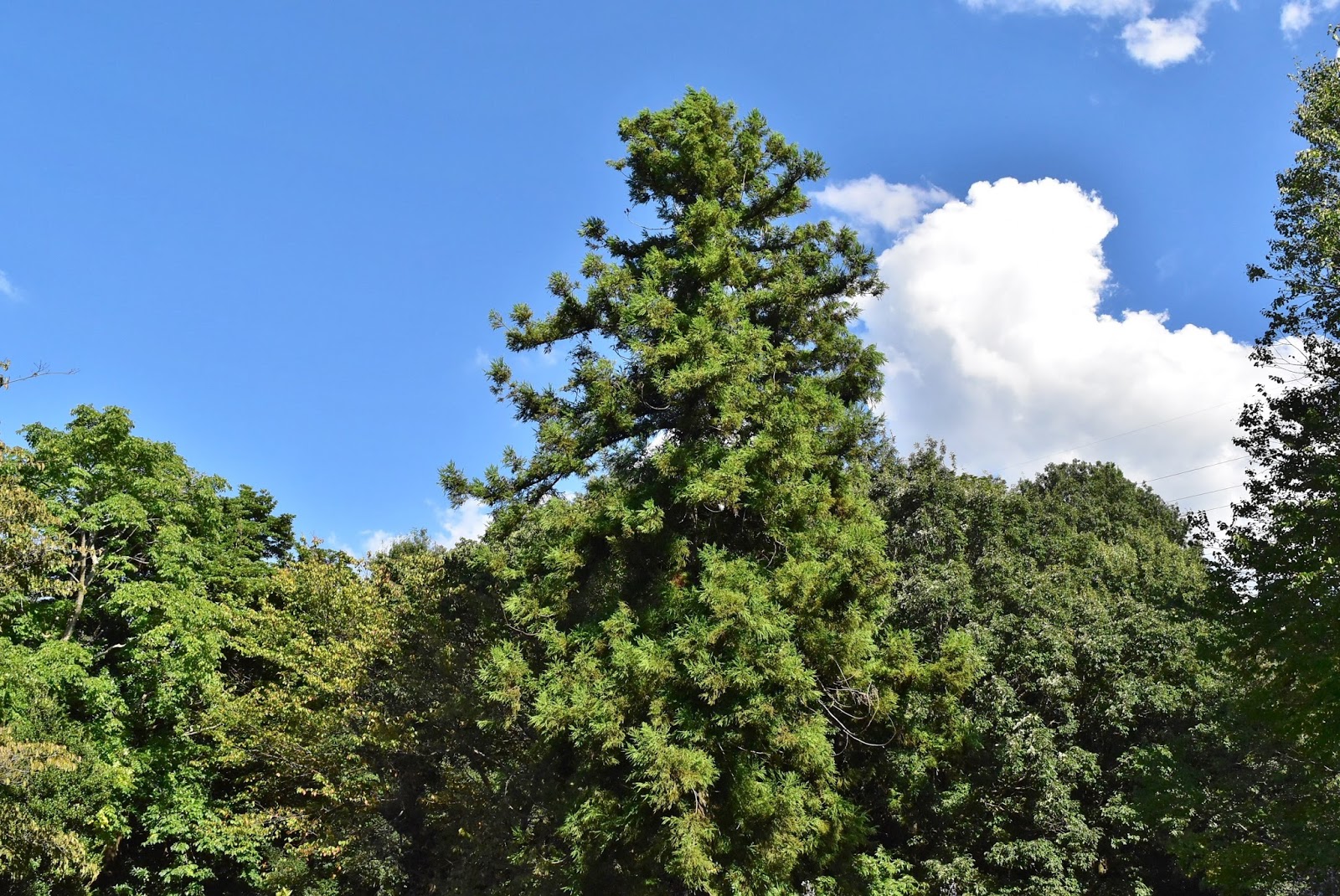
Cedar of Japan is a Japanese endemic species, is planted all over Japan as if it cover the national land of Japan.
Because of its fast growth, moreover, extending straight, it used to be evaluated utility value as a useful timber.
cedar of Japan in natural style

Ironically,over-planted and the labor costs of Japanese has been soaring, Japanese cedar is no more promising timber. Abandoned cedar is now make not only  the dim forest, but also many hay fever patients, so it have been demonized.


Flower of Japanese cedar

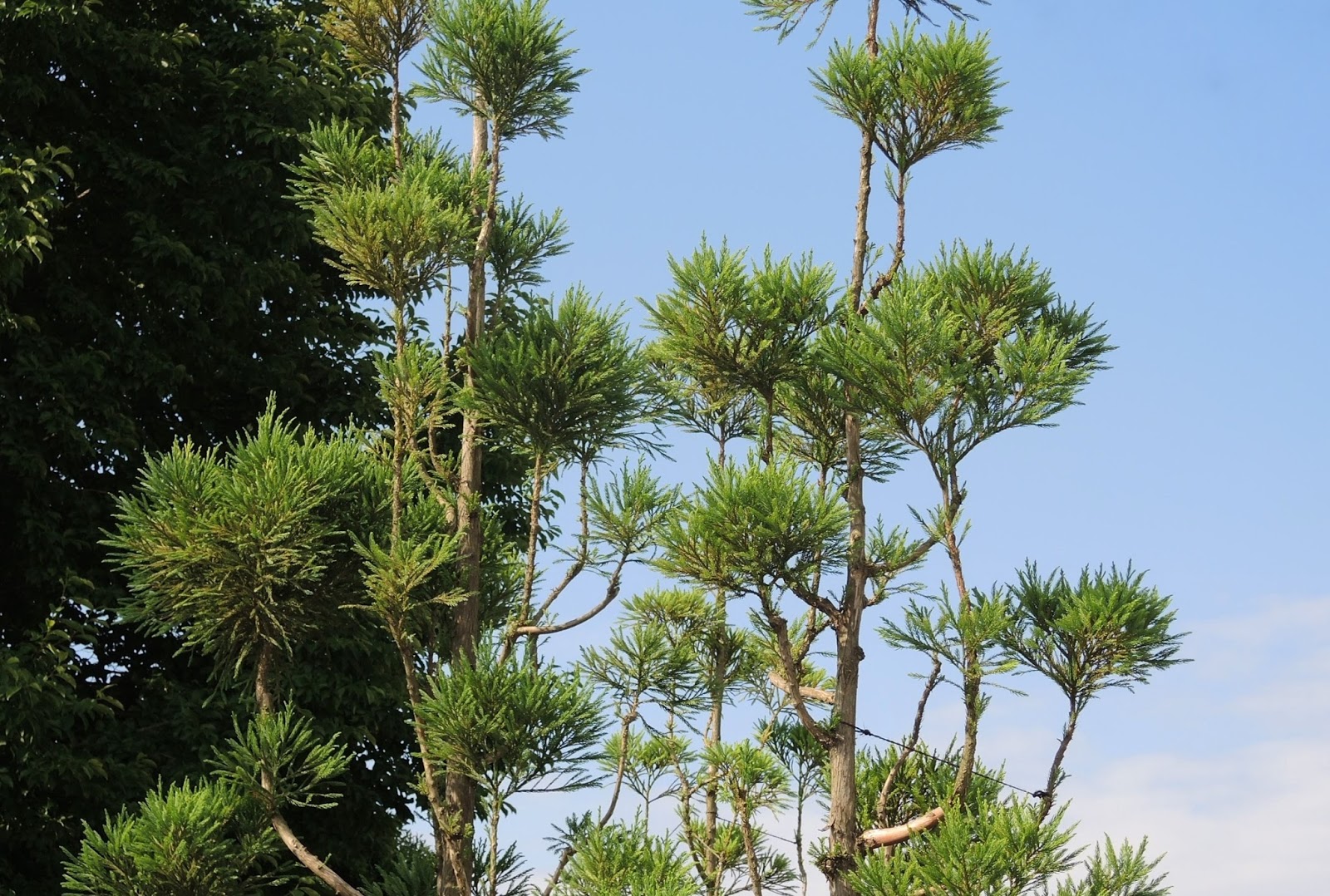
On the other hand, in the famous tourist destination of Japan such as old temples and shrines, there is always a big cedar tree. It also has become an important tourism resources such as the cedar tree of longevity in Yakushima. Cedar is indispensable in order to create a solemn and sacred atmosphere. And  we make a Japanese-style scenery,using wisely the pruned cedar even in the Japanese garden.

Japanese cedar in pruned style


Modern Japanese tend to demonize the cedar tree, but a long time ago even now cedar tree has supported our lives. Fortunately, no pollen cedar and low lumber way are being developed,innovation for co-exist will be achieved.

leves and cones

10/04/2016

Japanese Umbrella Pine (Kouya-maki)

Japanese Umbrella Pine(Sciadopitys verticillata) is known as the Japan-specific tree.
And in Japan, this tree is listed up as the world's three major garden tree, along with the Himalayan cedar and Brazilian pine.

It's slow growth, even if the big that it does not disturbed tree form, it has been used as a garden of the temple from the old days.

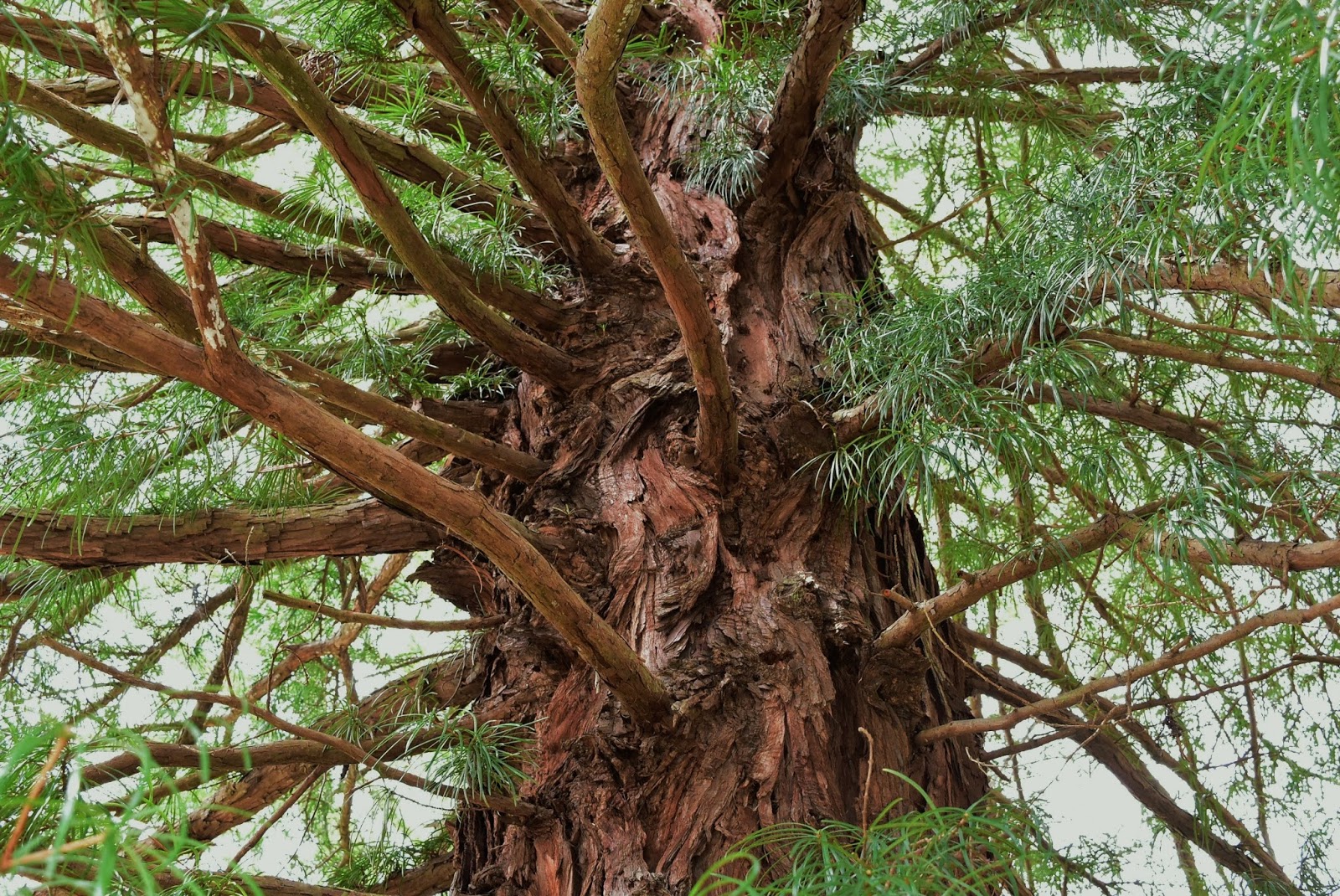
leaves of Japanese umbrella PIne

Its leaves are similar to the pine, not scratchy. Since softwood, flowers are inconspicuous, the species that can be in the fall is a characteristic.

leaf from pine cones

Surprisingly, it leaves are growing from the pine cones. However, in a sober phenomenon, not that Japanese people are talking about.

What is more important than it is,this timber is one of the best five of excellent timber in Japan, resistant to moisture. So people used it for bath tub and the coffin for the greats long time ago.

aged big tree

Today, it is hardly to make a coffin with this tree, not even to plant this tree in the garden in the younger generation. However, the beauty of the tree form of this tree is reviewed, Tokyo Sky Tree is said to mimic the shape of the tree.

looks like Tokyo sky tree???


10/03/2016

Mokkoku (fellow of the camellia)

Once,Mokkoku has been referred to as the king of Japanese garden tree.
As a proof, you can see this tree almost always in classic Japanese gardens. 
However, Mokkoku has no major feature,is the hard-to-remember tree.


In why,is this tree is common in Japanese gardens.
It is related to the national character of Japanese.
Mokkou grows slowly.The shape does not change too much.
This "does not change" is consistent with the nature of Japanese people,
does not like to stand out.
This is the main reason that this tree has become widespread in Japan.


Mokkoku blooms small white flowers in summer, also makes red fruits in the fall.


However these do not have much appreciation value.
Charm of this tree is essentially, Its leaves such as a shoehorn.

Leaves of Mokkoku is thick and shiny.
The era when there was no street lighting,the leaves is reflected in the moonlight.
It would have made a beautiful sight.  

Camphor tree (Kusunoki)

In Japan there is a tendency to sacred a large tree,
a lot of giant trees are left in the country.
One of the most large number tree in which is the camphor tree.

Referred to as the camphor tree in the Japanese the Kusunoki.


Camphor to be purified from the camphor will be celluloid of raw materials.
For this reason once they were brought up as a national policy.
Now they have been active in making the shade of a tree in streets and parks.


Leaves of a camphor tree has short live, 
they all will be replaced in about a year.
For this reason, the color of the leaves are bright.


Also favored as a symbol tree in a contemporary cityscape.

10/01/2016

Ginkgo

Ginkgo is a tree that is from the Jurassic on the earth.
It has a long life, to become a big tree,Japanese used to worship it as sacred tree.
Much the same as the  camphor tree, a number seen tree at shrines and temples.


Leaf of Ginkgo is used in the logo of the Tokyo Metropolitan.
Many place on the street, you will find the illustrations of it.
The shape of the leaf is likened to duck feet, this is the etymology of Ityou.(Japanese name of Ginkgo)

Because ginkgo is strong in pollution and fire, it is also often used as a street tree.
However, fruits of ginkgo (Gin nann) very smell and will be slimy after fall.
So, male trees are used as a street tree for safety and effortless cleaning of the road.


Old ginkgo tree, part of the stem sometimes will be the mysterious form.
Old Japanese likened this form to the woman's breast, the mother does not go out the milk, prayed to God of ginkgo.


There are many legends dealing with ginkgo trees.
For example...
At the time of the fire, waters came out from a big ginkgo automatically, and put out the fire....

Ginkgo is a familiar tree to the Japanese since ancient times.

Japanese maple(Momiji)

Japanese maple(Momiji) is a beautiful tree of autumn leaves to represent Japan,
has attracted not only by a number of Japanese but also travelers from overseas.


Japanese name "Momiji" means "leaves turn red ".
In addition to this, it may also be referred to as "Kaede"which means frog hand,
comes from the shape of the leaf.

It also shows us beautiful fresh green in spring,
and it doesn't stand out ,but with small flowers and propeller-shaped fruits.

propeller-shaped fruits

flowers of Japanese maple

The beautiful fall foliage is required cold.
Year that not enough of the cold will not be able to see the beautiful fall foliage.
Also, you can see more beautiful scenery in the high-altitude mountain than the city.